
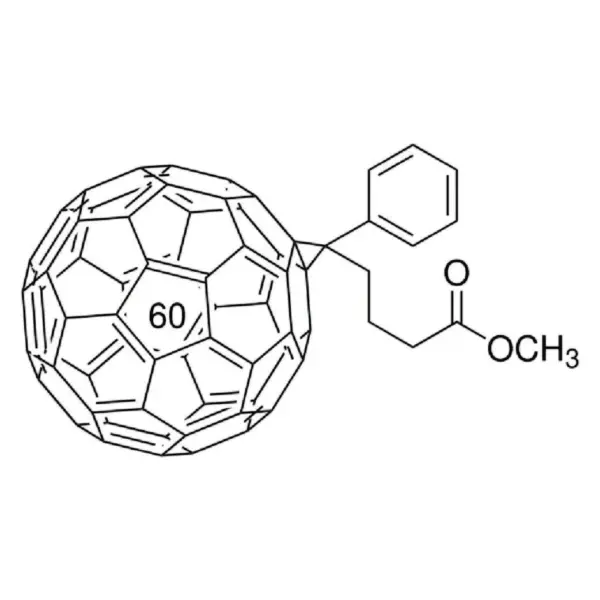
[6,6]-Phenyl C61 butyric acid methyl ester (684430) – Sigma-Aldrich
RM5,005.00Brand:
Sigma-Aldrich
Synonyms
1-[3-(Methoxycarbonyl)propyl]-1-phenyl-[6.6]C61, 3′H-Cyclopropa[1,9] [5,6]fullerene-C60-Ih-3′-butanoic acid 3′-phenyl methyl ester, PCBM, [60]PCBM
General Description
[6,6]-Phenyl C61 butyric acid methyl ester ([60]PCBM) is a methanofullerene that has a better diffusion in organic molecules than fullerenes(C60). It has high electron mobility which allows it to be used as an electron acceptor in major electrochemical applications.
Applications
Soluble n-channel organic semiconductor. For use as an n-type layer in plastic electronics, especially bulk heterojunction OFETs and photovoltaic cells (PVs).
[60]PCBM is an n-type semi-conductor widely used as an a electron transport material with low cost and high surface area in different energy based applications like organic photovoltaics (OPVs), perovskite solar cells (PSCs), organic field effect transistors (OFETs) and photodetectors
[6,6]-Phenyl C61 butyric acid methyl ester (684449) – Sigma-Aldrich
Price range: RM1,596.00 through RM4,427.00Brand:
Sigma-Aldrich
Synonyms
1-[3-(Methoxycarbonyl)propyl]-1-phenyl-[6.6]C61, 3′H-Cyclopropa[1,9] [5,6]fullerene-C60-Ih-3′-butanoic acid 3′-phenyl methyl ester, PCBM, [60]PCBM
General Description
(6,6)-Phenyl C61 butyric acid methyl ester ((60) PCBM) is a methanofullerene that has a better diffusion in organic molecules than fullerenes (C60). It has a high electron mobility which allows it to be used as an electron acceptor in major electrochemical applications.
Applications
(60)PCBM is an n-type semi-conductor widely used as an a electron transport material with low cost and high surface area in different energy based applications like organic photovoltaics, perovskite solar cells, field effect transistors and photodetectors.
Soluble n-channel organic semiconductor. For use as an n-type layer in plastic electronics, especially bulk heterojunction OFETs and photovoltaic cells (PVs).
[60]PCBM is an n-type semi-conductor with low cost and high surface area. It is widely used as an electron transport material in various energy-based applications like organic photovoltaics, perovskite solar cells, field effect transistors, and photodetectors.
[6,6]-Phenyl C61 butyric acid methyl ester (684457) – Sigma-Aldrich
RM5,289.00Brand:
Sigma-Aldrich
Synonyms
1-[3-(Methoxycarbonyl)propyl]-1-phenyl-[6.6]C61, 3′H-Cyclopropa[1,9] [5,6]fullerene-C60-Ih-3′-butanoic acid 3′-phenyl methyl ester, PCBM, [60]PCBM
General Description
[6,6]-Phenyl C61 butyric acid methyl ester ([60]PCBM) is a methanofullerene that has a better solubility in organic solvents than fullerenes(C60). It has high electron mobility, which enables its function as an electron acceptor in electrochemical applications.
Applications
Soluble n-channel organic semiconductor. For use as an n-type layer in plastic electronics, especially bulk heterojunction OFETs and photovoltaic cells (PVs).
[60]PCBM is an n-type semi-conductor widely used as an electron transport material with low cost and high surface area in different energy based applications like organic photovoltaics (OPVs), perovskite solar cells (PSCs), field effect transistors (FETs) and photodetectors
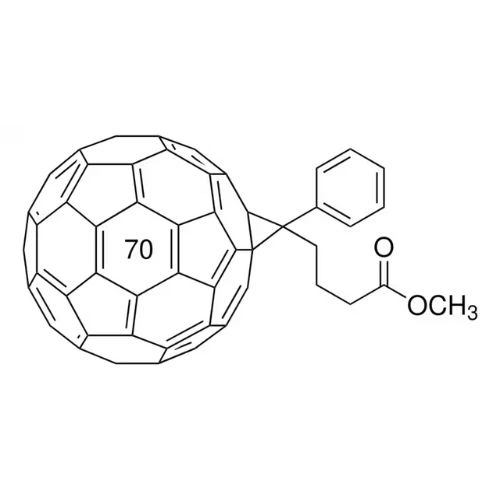
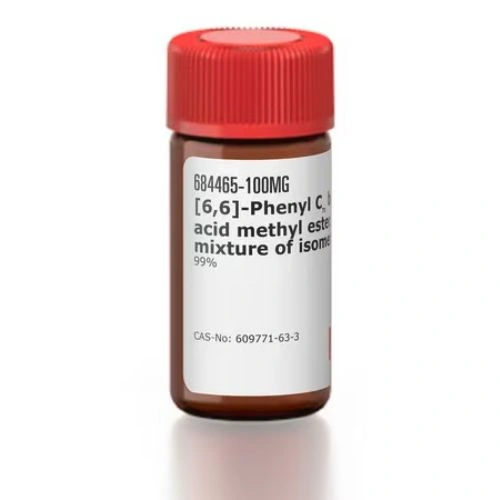
[6,6]-Phenyl C71 butyric acid methyl ester, mixture of isomers, 99% – Sigma-Aldrich
Price range: RM2,538.00 through RM8,202.00Brand:
Sigma-Aldrich
Synonyms
3′H-Cyclopropa[8,25] [5,6]fullerene-C70-D5h(6)-3′butanoic acid, 3′Phenyl-3′H-cyclopropa[8,25] [5,6]fullerene-C70-D5h(6)-3′butanoic acid, methyl ester, [70]PCBM
Cas No.
609771-63-3
General description
[6,6]-Phenyl C71 butyric acid methyl ester, mixture of isomers ([70]PCBM), is a high fullerene analog to [60]PCBM, which has an enhanced absorption of light in the visible region. It can be used in the development of electrochemical devices with a high current density.
Application
[70]PCBM and PCDTBT can be used as an acceptor and donor based fullerene derivative, which can be used in the fabrication of organic photovoltaics. It may be used with P3HT as an electron transporting material for the fabrication of solar cells with higher power efficiency.
[70]PCBM can be blended with a variety of electron donors, which include P3HT and MDMO-PPV, for the fabrication of polymeric solar cells with a high power conversion efficiency (PCE). It can also be used in the organic field effect transistor (OFET) based applications.
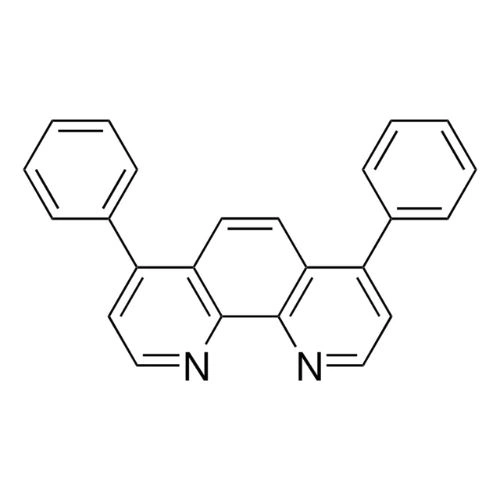
4,7-Diphenyl-1,10-phenanthroline – Sigma-Aldrich
RM596.00Brand:
Sigma-Aldrich
Synonyms
Bathophenanthroline, 4,7-Diphenyl-1,10-phenanthroline, BPhen
Cas No.
1662-01-7
Application
Intermolecular charge-transfer states at the interface between electron donating (D) and accepting (A) materials are crucial for the operation of organic electronics, such as solar cells, transistors and organic light-emitting diodes (OLEDs). The 4,7-Diphenyl-1,10-phenanthroline, also known as Bathophenanthroline (Bphen) enables use as Electron Transport / Hole Blocking Layer (ETL / HBL) in your organic electronic devices. It has a μe of about 3.0 x 10⁻⁴ cm2 V−1 s−1 and is solution-processable.
Features and Benefits
We are committed to bringing you Greener Alternative Products, which adhere to one or more of The 12 Principles of Green Chemistry. This product has been enhanced for catalytic efficiency. Click here for more information.
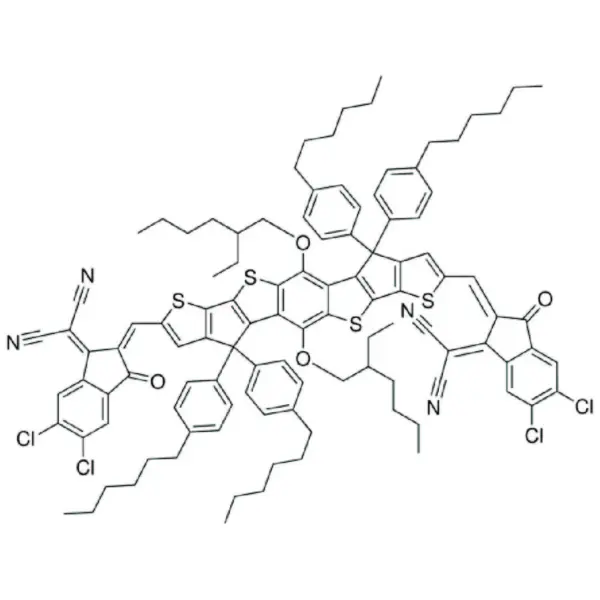
BT-CIC – Sigma-Aldrich
RM3,693.00Brand:
Sigma-Aldrich
Synonyms
4,4,10,10-tetrakis(4-hexylphenyl)-5,11-(2-ethylhexyloxy)-4,10-dihydrodithienyl[1,2-b:4,5b′ ]benzodithiophene-2,8-diyl)bis(2-(3-oxo-2,3-dihydroinden-5,6-dichloro-1-ylidene)malononitrile), NFA147, PCE147
CAS No
2197167-51-2
General Description
BT-CIC is a highly efficient, ultra-narrow bandgap, NIR absorbing, non-fullerene acceptor, designed to use in high performance organic photovoltaic devices.
A recently reported tandem cell, employing BT-CIC as the non-fullerene acceptor and PCE-10 as donor for the back cell showed an PCE of 15%.
Device performance:
Tandem [Front] (170 nm DTDCPB:C70 + ARC) [Back]PCE-10:BTCIC (1:1.5, 75 nm)
Jsc=13.3 ± 0.3 mA/cm2
Voc=1.59 ± 0.01 V
FF=0.71± 0.01
PCE=15.0% ± 0.3%
ARC: an antireflection coating
Cesium iodide, 99.999% trace metals basis – Sigma-Aldrich
Price range: RM224.00 through RM3,735.00Brand:
Sigma-Aldrich
Synonyms
Caesium iodide, Caesium monoiodide
Applications
Cesium iodide can be used as precursor to synthesize lead-free perovskite material, Cs2NaBiI6 (CNBI). The CNBI is highly stable and finds application in the field of solar cells, LEDs, and lasers.
It can be used to prepare brightest red emitting Cs2HfI6 scintillator which is applicable in high resolution gamma spectroscopy.
It can also be used tosynthesize Cesium based nanocrystals for the detection of ionizingradiations.
Features & Benefits
- High quantum efficiency
- High stability to ambient air and gas environment
Frequently used in devices such as phosphor screens for medical imaging, scintillators, calorimeters and a variety of particle detectors.
| CAS Number |
7789-17-5 |
| Empirical Formula |
CsI |
| Molecular Weight |
259.81 |
| Form |
Solid |
| Assay |
99.999% trace metals basis |
| Impurities |
≤15.0 ppm Trace Metal Analysis |
| Application(s) |
solar cells, LEDs, and lasers |
Cesium Iodide, AnhydroBeads™, 99.999% trace metals basis (Perovskite grade) – Sigma Aldrich
RM937.00Brand:
Sigma-Aldrich
Synonyms
Cesium monoiodide
General Description
Cesium iodide anhydrous can be used as a precursor or component in the synthesis of the perovskite absorber layer in perovskite solar cells. By introducing cesium iodide into the perovskite composition, the bandgap of the material can be tuned to better match the solar spectrum, optimizing the light absorption and energy conversion efficiency of the solar cell.
Cesium iodide finds application in synthesis of perovksites based photovoltaic materials. Our perovskite grade CsI can readily be dissolved in 1:1 vol DMF/DMSO to yield 1M solution.
Features & Benefits
Frequently used in devices such as phosphor screens for medical imaging, scintillators, calorimeters and a variety of particle detectors.
Packing
Packaged in ampules
Legal Information
AnhydroBeads is a trademark of Sigma-Aldrich Co. LLC
| CAS Number |
7789-17-5 |
| Empirical Formula |
CsI |
| Molecular Weight |
259.81 |
| Product line |
AnhydroBeads™ |
| Assay |
99.999% trace metals basis |
| Form |
crystals |
| Particle size |
~10 mesh |
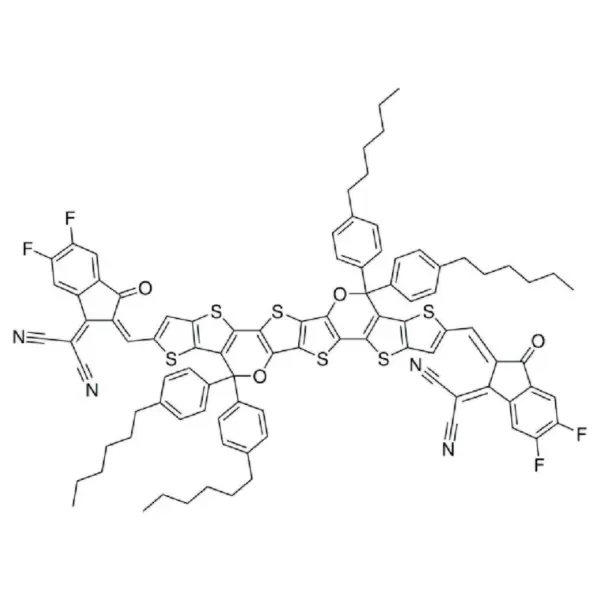
COi8DFIC – Sigma-Aldrich
RM2,638.00Brand:
Sigma-Aldrich
Synonyms
2,2′-[[4,4,11,11-tetrakis(4-hexylphenyl)-4,11-dihydrothieno[2′,3′:4,5]thieno[2,3-d]thieno[2′′′′,3′′′′:4′′′,5′′′]thieno[2′′′,3′′′:4′′,5′′]pyrano[2′′,3′′:4′,5′]thieno[2′,3′:4,5]thieno[3,2-b]pyran-2,9-diyl]bis[methylidyne(5,6-difluoro, NFA146, O6T-4F, PCE146
CAS No
2184266-44-0
General Description
COi8DFIC or O6T-4F is a highly efficient, n-type, low-bandgap nonfullerene acceptor with strong NIR absorption.
In a recent study, COi8DFIC or O6T-4F was selected in a Tandem cell by computer assited design and gave a record PCE of 17.3∃% for fabricated organic solar cells.
COi8DFIC or O6T-4F is frequently selected to blend with a narrow-bandgap donor material and another narrow bandgap acceptor material to fabricate ternary organic solar cells. The PTB7-Th:COi8DFIC:PC71BM ternary cells offered a PCE of 14.08%. By further adopting a post-annealing process, an outstanding PCE of 14.62% can be achieved. Furthermore, the device utilizing COi8DFIC exhibited a good thermal stability with PCEs over 13.5% in a wide temperature range (70–160 °C).
Application
COi8DFIC is primarily utilized as a non-fullerene acceptor in OPV devices. It exhibits a broad absorption spectrum, enabling it to absorb light across a wide range of wavelengths, including the visible and near-infrared regions. This property allows for efficient utilization of a broader range of solar radiation, enhancing the light-harvesting capability of the OPV device. COi8DFIC can be employed as the electron transport material in OFET devices.
COi8DFIC or O6T-4F is a highly efficient, n-type, low-bandgap nonfullerene acceptor with strong NIR absorption
In a recent study, COi8DFIC or O6T-4F was selected in a Tandem cell by computer assited design and gave a record PCE of 17.3% for fabricated organic solar cells.
Tandem Cell Device performance:
ITO/ZnO/PFN-Br/PBDB-T:F-M/M-PEDOT/ZnO/PTB7- Th:O6T-4F:PC71BM/MoO3/Ag
Voc=1.642 V
Jsc=14.35 mA/cm2
FF=73.7%
PCE=17.3%
COi8DFIC or O6T-4F is frequently selected to blend with a narrow-bandgap donor material and another narrow bandgap acceptor material to fabricate ternary organic solar cells. The PTB7-Th:COi8DFIC:PC71BM ternary cells offered a PCE of 14.08%. By further adopting a post-annealing process, an outstanding PCE of 14.62% can be achieved. Furthermore, the device utilizing COi8DFIC exhibited a good thermal stability with PCEs over 13.5% in a wide temperature range (70-160 °C).
Device structure:
ITO/ZnO/PTB7-Th:COi8DFIC:PC71BM/MoO3/Ag
Before annealing
Voc=0.702 V
Jsc=27.74 mA/cm2
FF=0.701
PCE=13.65%
After annealing at 80°C
Voc=0.727 V
Jsc=27.39 mA/cm2
FF=0.734
PCE=14.62%
COi8DFIC, an efficient non-fullerene acceptor material, has a strong near-infrared range (NIR) light absorption. It can be used as an n-type small molecule acceptor material for the fabrication of polymeric solar cells.
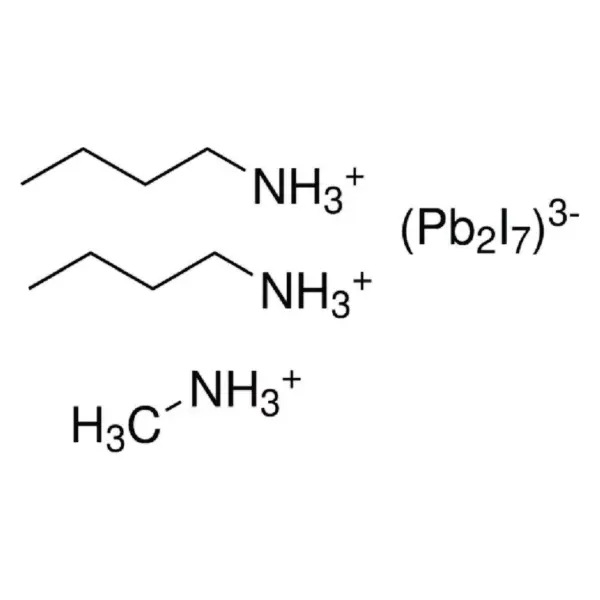

di-n-butylammonium methylammonium lead(II) heptaiodide – Sigma-Aldrich
RM2,191.00Brand:
Sigma-Aldrich
Synonyms
(BA)2(MA)Pb2I7, 2D perovskite, Bis(butylammonium) methylammonium heptaiododiplumbate
General Description
We are committed to bringing you Greener Alternative Products, which adhere to one or more of The 12 Principles of Greener Chemistry. This product has been enhanced for “Energy efficiency”.
Applications
2D perovskites have been used as the active material in may applications such as light emmiting diodes,[1] phototransistors,[2] and solar cells.[3] Unlike 3D perovskites, these layered materials give higher moisture stability and longer device lifetimes.
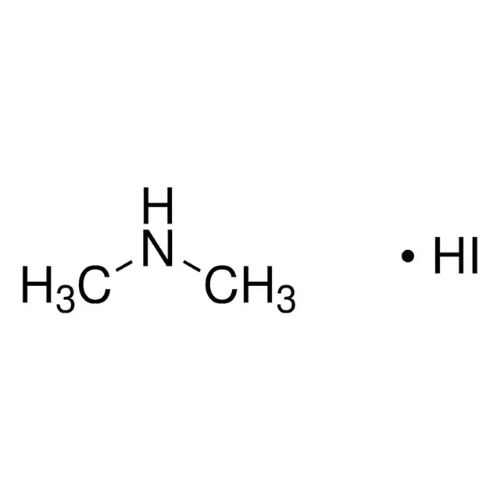
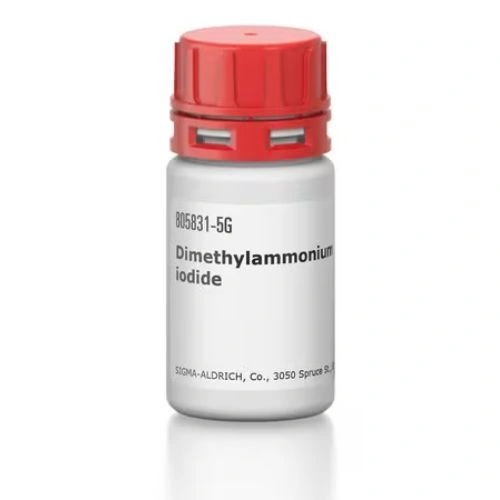
Dimethylammonium iodide – Sigma-Aldrich
Price range: RM943.00 through RM2,096.00Brand:
Sigma-Aldrich
Synonyms
Dimethylamine hydroiodide, Dimethylammonium iodide
Cas No.
51066-74-1
General description
We are committed to bringing you Greener Alternative Products, which adhere to one or more of The 12 Principles of Greener Chemistry. This product has been enhanced for energy efficiency. Click here for more details.
Application
Dimethylammonium iodide (DMAI) is used as an additive for the fabrication of perovskite-based solar cells. It improves the crystal phases and morphologies of the perovskite films, which affect the power conversion efficiency (PCE) of the optoelectronic devices.
The iodide and bromide based alkylated halides find applications as precursors for fabrication of perovskites for photovoltaic applications.
Legal Information
Product of Greatcell Solar Materials Pty Ltd.Greatcell Solar® is a registered trademark of Greatcell Solar Materials Pty Ltd
Greatcell Solar is a registered trademark of Greatcell Solar
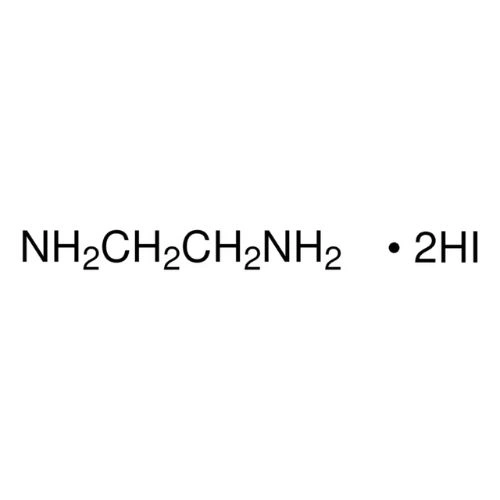
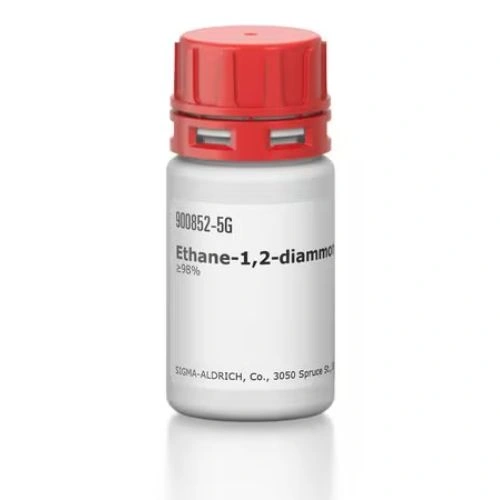
Ethane-1,2-diammonium iodide, ≥98% – Sigma-Aldrich
Price range: RM674.00 through RM2,025.00Brand:
Sigma-Aldrich
Synonyms
Ethylenediamine dihydriodide, 1,2-Ethanediamine dihydriodide, 1,2-Ethanediamine dihydroiodide, Ethane-1,2-diaminium iodide, Ethane-1,2-diamino dihydriodide, Ethylenediammonium diiodide, Greatcell Solar®., 1,2-Diaminoethane dihydriodide
Cas No.
5700-49-2
General description
We are committed to bringing you Greener Alternative Products, which adhere to one or more of The 12 Principles of Greener Chemistry. This product has been enhanced for energy efficiency. Click here for more details.
Application
Organohalide based perovskites have emerged as an important class of material for solar cell applications. Our perovskites precursors are useful for synthesizing mixed cation or anion perovskites needed for the optimization of the band gap, carrier diffusion length and power conversion efficiency of perovskites based solar cells.
Legal Information
Product of Greatcell Solar Materials Pty Ltd.
Greatcell Solar is a registered trademark of Greatcell Solar Materials Pty Ltd.
Greatcell Solar is a registered trademark of Greatcell Solar
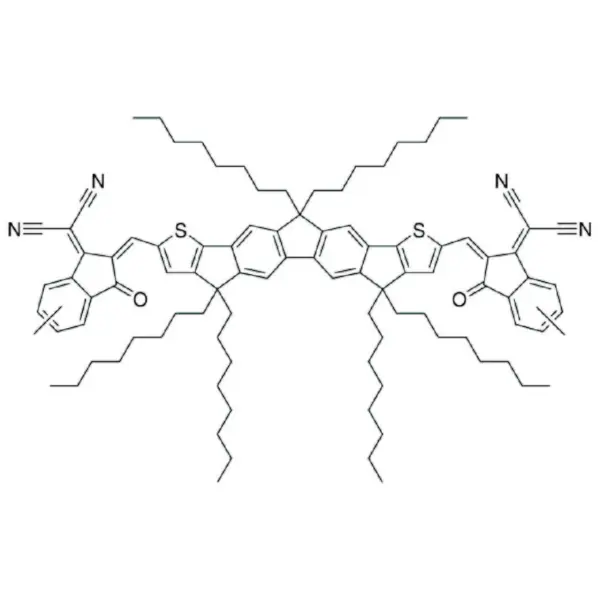
F-M – Sigma-Aldrich
RM3,751.00Brand:
Sigma-Aldrich
Synonyms
4,4,7,7,12,12-octyl-7,12-dihydro- bis[methylidyne(3-oxo-methyl-1H indene-2,1(3H)-diylidene)]]bis-4H-thieno[2″,3″:1′,2′]indeno[5′,6′:5,6]-s-indaceno[1,2-b]thiophene, FTIC-C8C8M
CAS No
2239303-91-2
General Description
Non-fullerene acceptors (NFAs) are currently a major focus of research in the development of bulk-heterojunction organic solar cells (OSCs). In contrast to the widely used fullerene acceptors (FAs), the optical properties and electronic energy levels of NFAs can be designed and readily tuned. NFA-based OSCs can also achieve greater thermal stability and photochemical stability, as well as longer device lifetimes, than their FA-based counterparts. Recent developments have led to a rapid increase in power conversion efficiencies for NFA OSCs, with values now exceeding 15% in a single junction cell, and >17% for a tandem cell, demonstrating the viability of using NFAs to replace FAs in next-generation high-performance OSCs.
Application
F-M is a non-fullerene acceptor that absorbs visible light, when used in a front cell paired with NIR absorbing rear cell, the resulted tandem organic solar cell gave a record energy conversion efficiency of 17.3%.[1]
Tandem Cell Device performance:
ITO/ZnO/PFN-Br/PBDB-T:F-M/M-PEDOT/ZnO/PTB7- Th:O6T-4F:PC71BM/MoO3/Ag
Voc=1.642 V
Jsc=14.35 mA/cm2
FF=73.7%
PCE=17.3%
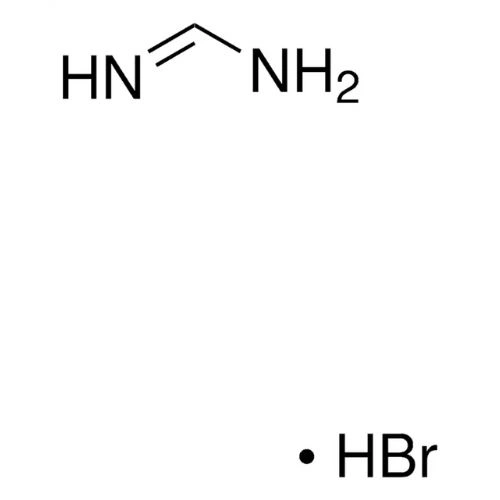
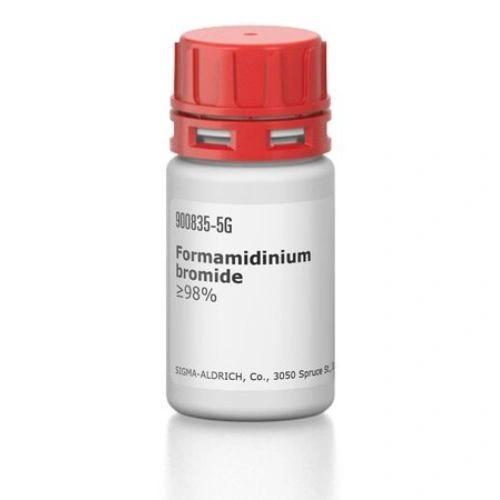
Formamidinium bromide, ≥98% – Sigma-Aldrich
Price range: RM820.00 through RM2,395.00Brand:
Sigma-Aldrich
Synonyms
Formamidine hydrobromide, Greatcell Solar®, Iminomethylamine hydrobromide, Methanimidamide bromide
Cas No.
146958-06-7
General description
We are committed to bringing you Greener Alternative Products, which adhere to one or more of The 12 Principles of Greener Chemistry. This product has been enhanced for energy efficiency. Click here for more details.
Application
Formamidinium bromide can be used as a precursor material for the synthesis of perovskite absorber layers in solar cells. It can be explored as an additive or component in the design and development of new energy storage materials and devices.
Organohalide based perovskites have emerged as an important class of material for solar cell applications. Our perovskites precursors are useful for synthesizing mixed cation or anion perovskites, needed for the optimization of the band gap, carrier diffusion length and power conversion efficiency of perovskites based solar cells.
Legal Information
Product of Greatcell Solar Materials Pty Ltd.Greatcell Solar is a registered trademark of Greatcell Solar Materials Pty Ltd.
Greatcell Solar is a registered trademark of Greatcell Solar
Formamidinium Iodide | Greatcell Solar® – Sigma Aldrich
Price range: RM1,254.00 through RM2,276.00Brand:
Sigma-Aldrich
Synonyms
Greatcell Solar®, Iminomethylamine hydriodide, Methanimidamide iodide
General Description
We are committed to bringing you Greener Alternative Products, which adhere to one or more of The 12 Principles of Greener Chemistry. This product has been enhanced for energy efficiency. Click here for more details.
Application
Formamidinium iodide (FAI) is an organic halide, which can be used as a precursor solution in the fabrication of perovskite-based heterojunction solar cells.
Formamidinium iodide (FAI) serves as a critical precursor material in the fabrication of perovskite solar cells. FAI is used in material engineering studies to investigate the impact of formamidinium incorporation on perovskite film properties and device performance.
The iodide and bromide based alkylated halides find applications as precursors for fabrication of perovskites for photovoltaic applications.
Legal Information
Product of Greatcell Solar Materials Pty Ltd.
Greatcell Solar® is a registered trademark of Greatcell Solar Materials Pty Ltd
Greatcell Solar is a registered trademark of Greatcell Solar
| Description |
Elemental Analysis: C ~7.0% |
| Linear Formula |
CH5IN2 |
| Molecular Weight |
171.97 |
| MDL number |
MFCD28369273 |
| UNSPSC Code |
12352101 |
| NACRES |
Na.23 |
| Greener alternative product characteristics |
Design for Energy Efficiency |
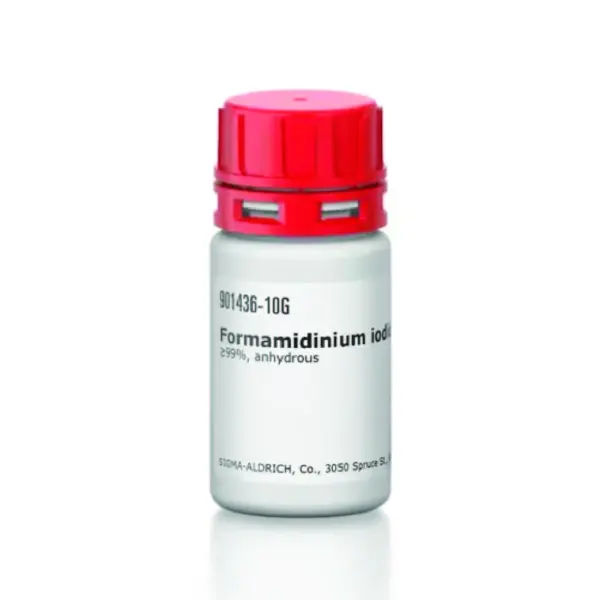
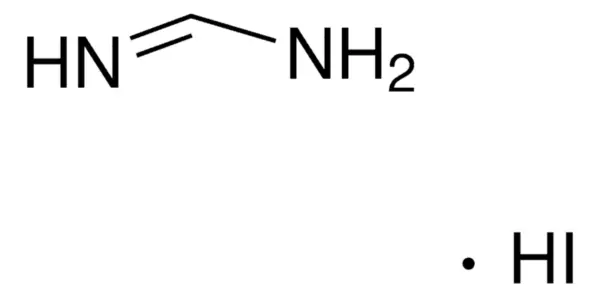
Formamidinium Iodide, ≥99%, Anhydrous – Sigma Aldrich
RM2,000.00Brand:
Sigma-Aldrich
Synonyms
Formamidine Hydroiodide, methanimidamide hydroiodide
General Description
We are committed to bringing you Greener Alternative Products, which adhere to one or more of The 12 Principles of Greener Chemistry. This product has been enhanced for energy efficiency. Click here for more details.
Application
Formamidinium iodide (FAI) is a compound that finds significant application in the field of photovoltaics, particularly in the development of perovskite solar cells. Formamidinium-based perovskite materials derived from FAI have also shown potential in other optoelectronic applications. These include light-emitting diodes (LEDs), photodetectors and lasers.
Organohalide based perovskites have emerged as an important class of material for solar cell applications[1][2][3][4]. Our perovskites precursors with extremely low water contents are useful for synthesizing mixed cation or anion perovskites needed for the optimization of the band gap, carrier diffusion length and power conversion efficiency of perovskites based solar cells.
| CAS Number |
879643-71-7 |
| Empirical Formula (Hill Notation) |
CH5IN2 |
| Molecular Weight |
171.97 |
| MDL number |
MFCD28369273 |
| UNSPSC Code |
12352111 |
| NACRES |
Na.23 |
| Greener alternative product characteristics |
Design for Energy Efficiency |
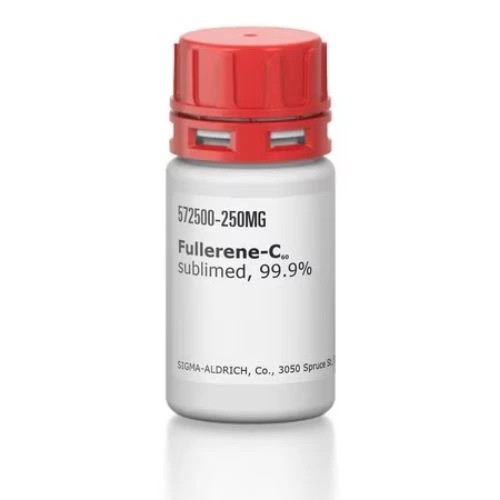
Fullerene-C60, sublimed, 99.9% – Sigma-Aldrich
Price range: RM972.00 through RM7,956.00Brand:
Sigma-Aldrich
Synonyms
Buckminsterfullerene
Cas No.
99685-96-8
General description
C60 is an n-channel organic semiconductor. High reactivity of fullerenes is attributed to its characteristic pyramidalization of the sp2 carbons. C60 is purified by column chromatography in toluene, then heat-treated under vacuum to remove solvent residue. Highly crystalline sublimed material with low solvent and metal content was recovered.
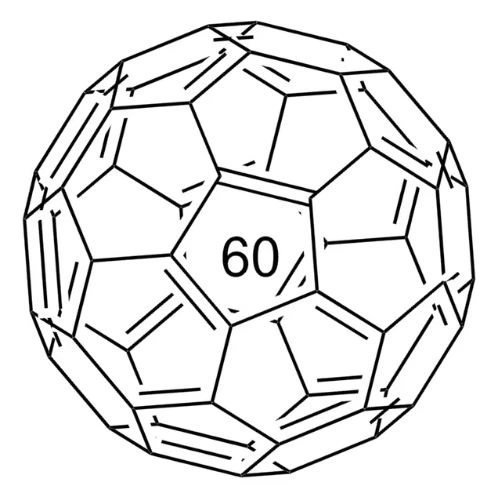
Fullerene-C60 (C60) has a closed-cage structure that is icosachedrally shaped with 60 sp2 hybridized carbon. It is majorly utilized in the development of novel materials for a wide range of energy based applications.
We are committed to bringing you Greener Alternative Products, which adhere to one or more of The 12 Principles of Greener Chemistry. This product has been enhanced for energy efficiency. Find details here.
Application
An n-channel organic semiconductor. Water suspension of C60 was studied for its effect on the growth, cell viability and membrane integrity of Escherichia coli B23.
C60 can be used for a wide range of applications, such as anode materials for lithium (Li)-ion batteries, and pentacene-C60 based solar cells with high quantum efficiency. It can be incorporated in (1,4-phenylene vinylene) (PPV) matrix for applications in photovoltaics.
Fullerene-C60 (sublimed, 99.9%) belongs to the class of carbonaceous materials. It can be used for a variety of alternative energy applications, which include lithium-ion batteries, organic photovoltaic cells (OPV), heterojunction solar cells, polymeric photodetectors, photodiodes, and photocatalysis.
Graphene/PEDOT:PSS hybrid ink, dispersion in DMF, avg. no. of layers, 1 ‑ 3 – Sigma-Aldrich
RM1,894.00Brand:
Sigma-Aldrich
Synonyms
Conductive ink, Electrochemically exfoliated graphene ink, G/PEDOT:PSS, Graphene ink
Cas No.
–
General description
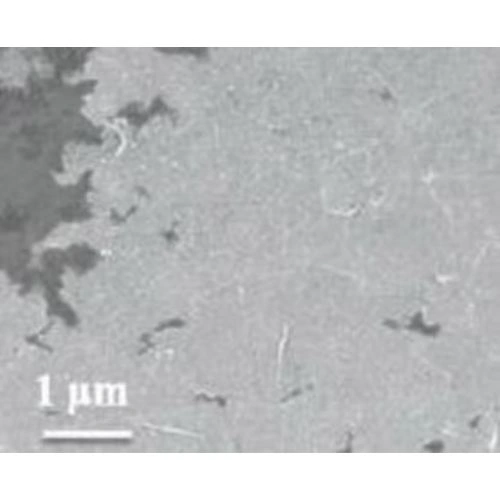
- Graphene preparation method: Electrochemical exfoliation.
- Graphene thickness by AFM: 80%, 1-3 layers.
- Sheet size by AFM: 10 μm.
- Oxygen content: 7.5% (by XPS) (C/O-ratio: 12.3).
- Raman I_D/I_G ratio: 0.4.
- Sheet resistance: 4.8 kΩ/sq.
- Typical properties of films produced thereof (after spray coating):
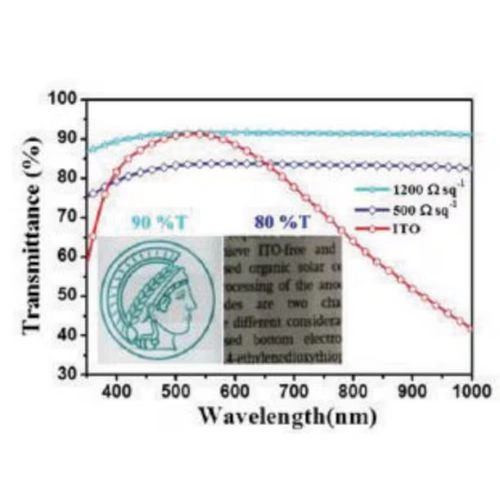
a) 11 nm film: 90% transmittance, 1200 Ω/sq (as made).
b) 20 nm film: 80% transmittance, 500 Ω/sq (as made).
Lead(II) bromide, Anhydrobeads™, 99.999% trace metals basis, (perovskite grade) – Sigma-Aldrich
RM817.00Brand:
Sigma-Aldrich
Synonyms
Lead bromide, Lead dibromide, Plumbous bromide
Cas No.
10031-22-8
Application
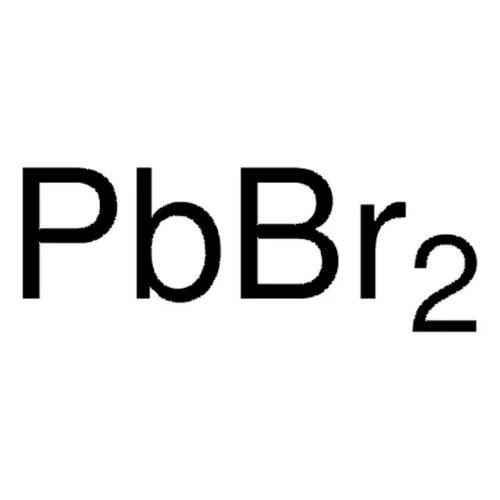
Lead bromide finds application in synthesis of perovksites based photovoltaic materials. Our perovskite grade PbBr2 can readily be dissolved in DMF: DMSO (1:1) to yield 1M solution.
Lead(II) Bromide is a key component in the fabrication of the perovskite absorber layer in perovskite solar cells. It is commonly combined with other metal halides, such as methylammonium lead triiodide (MAPbI3), to form the perovskite structure. The high purity level and trace metal basis of the material contribute to the efficiency and stability of the resulting solar cells.
Packaging
5 g in ampule
Legal Information
AnhydroBeads is a trademark of Sigma-Aldrich Co. LLC
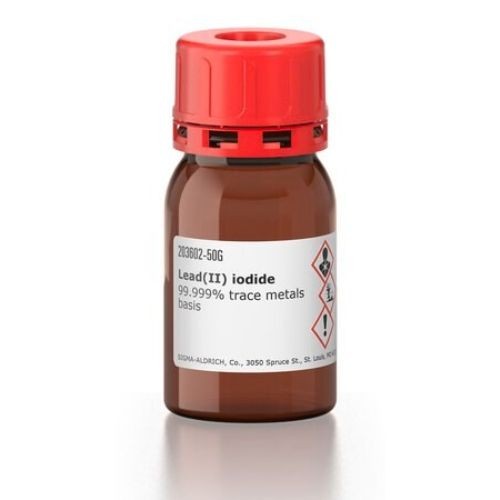
Lead(II) iodide, 99.999% trace metals basis – Sigma-Aldrich
Price range: RM1,038.00 through RM11,048.00Brand:
Sigma-Aldrich
Synonyms
Diiodolead, Plumbous iodide
Cas No.
10101-63-0
General description
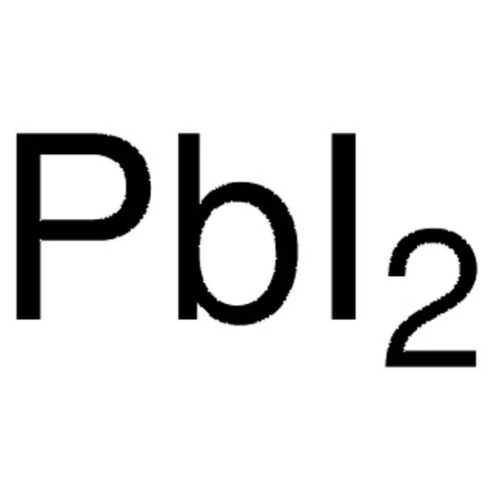
Lead(II) iodide (PbI2) is a compound with significant potential in the field of material science due to its unique characteristics, including its crystal structure, optical properties, and electronic behavior. Its applications in various areas such as photovoltaics, optoelectronics, and semiconductor devices, making it a subject of extensive research and development.,Lead iodide is a direct wide bandgap semiconductor with unique properties like high thermal conductivity, high electron saturation velocity, chemical stability, and wide temperature range operation capabilities (−200 °C up to +130 °C). Itis widely used as an x- and γ-ray detector, as it shows high absorption and carrier collection with minimal noise. PbI2 is also used in solar cells, bioimaging, and photoconductors.
Application
Lead(II) iodide can be used as:
- A precursor salt in the fabrication of perovskite solar cells. The addition of a small molar excess of PbI2 to the precursor solution can enhance device performance by improving charge extraction.
- A potential electrode material in battery configurations due to its electrochemical properties. Its ability to undergo reversible reactions makes it a candidate for use in lead-based batteries.
- A key component in combination with lead monoxide (PbO) to create a stable and sensitive semiconductor detector material for non-destructive testing (NDT) radiation dose detection.
- A key component to develop X-ray detectors for medical imaging.
- To prepare cesium lead iodide perovskite quantum dots for highly stable LEDs.
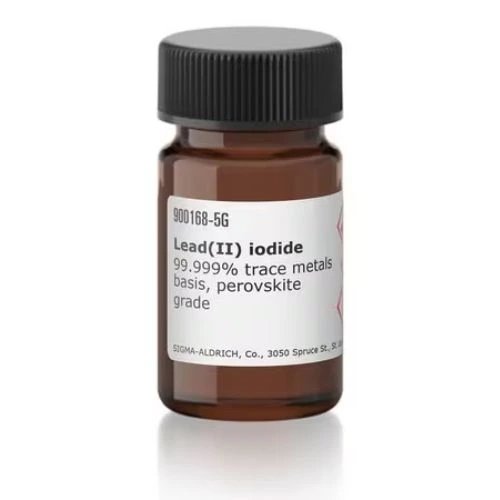
Lead(II) iodide, 99.999% trace metals basis, perovskite grade – Sigma-Aldrich
RM848.00Brand:
Sigma-Aldrich
Synonyms
Lead diiodide
Cas No.
10101-63-0
General description
Lead(II)iodide is a wide bandgap (2.32 eV) semiconductor material. It has uniqueproperties like high resistivity, chemical stability, and a wide range oftemperature applications (−200 °C up to +130 °C). Perovskites with lead as the central cation produce the bestphotovoltaic efficiency. We offer lead iodide, specifically designed forenhanced solar cell performance.
Application
Lead iodide finds application in synthesis of perovskites based photovoltaic materials. Our perovskite grade PbI2 can readily be dissolved in DMF to yield 1M solution.
Lead(II) iodide (PbI2) in perovskite grade refers to high-purity lead iodide specifically used for the synthesis and fabrication of perovskite materials, such as formamidinium lead iodide (FAPbI3) or methylammonium lead iodide(MAPbI3), which are commonly studied for perovskite solar cells and other optoelectronic devices. The high purity of lead(II) iodide perovskite grade contributes to the efficiency, stability and reproducibility of perovskite solar cells.
Other Notes
Very air and moisture sensitive. Please handle under argon atmosphere in a glove box.
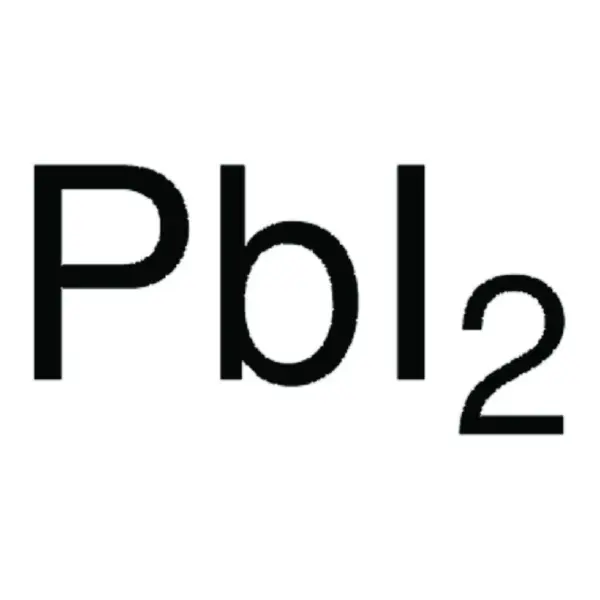
Lead(II) iodide, AnhydroBeads™, −10 mesh, 99.999% trace metals basis – Sigma Aldrich
Price range: RM593.00 through RM1,918.00Brand:
Sigma-Aldrich
Synonyms
Lead diiodide, Lead diiodide (PbI2), Lead iodide, Plumbous iodide
General Description
Lead(II) iodide is a wide band gap(2.32 eV)semiconductor material with unique properties such as high resistivity, a widetemperature range (−200 °C up to +130 °C), and good chemical stability.
Application
Lead(II)iodide can be used as a starting material to prepare:
- Polycrystalline α-FAPbI3 thin films by solution processing method. These polycrystalline thin films are applicable as photodetectors.
- Organic/inorganic hybrid 2D perovskite materials, applicable in solar cells.
It can also be used to fabricate a gamma-ray detector at room temperature.
Legal Information
AnhydroBeads is a trademark of Sigma-Aldrich Co. LLC
| CAS Number |
10101-63-0 |
| Linear Formula |
PbI2 |
| Molecular Weight |
461.01 |
| Reaction Suitability |
Core: lead |
| Impurities |
≤15.0 ppm Trace Metal Analysis |
| Particle size |
−10 mesh |
| Application(s) |
electroplating |
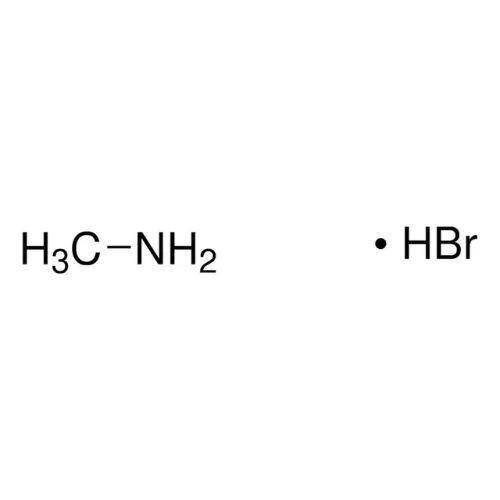
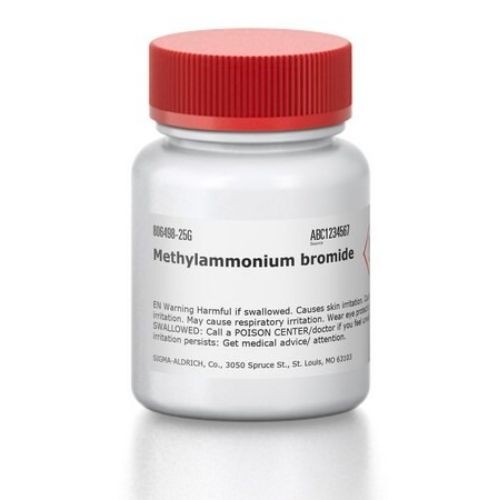
Methylammonium bromide – Sigma-Aldrich
RM3,620.00Brand:
Sigma-Aldrich
Synonyms
Lead diiodide
Cas No.
10101-63-0
General description
Lead(II)iodide is a wide bandgap (2.32 eV) semiconductor material. It has uniqueproperties like high resistivity, chemical stability, and a wide range oftemperature applications (−200 °C up to +130 °C). Perovskites with lead as the central cation produce the bestphotovoltaic efficiency. We offer lead iodide, specifically designed forenhanced solar cell performance.
Application
Lead iodide finds application in synthesis of perovskites based photovoltaic materials. Our perovskite grade PbI2 can readily be dissolved in DMF to yield 1M solution.
Lead(II) iodide (PbI2) in perovskite grade refers to high-purity lead iodide specifically used for the synthesis and fabrication of perovskite materials, such as formamidinium lead iodide (FAPbI3) or methylammonium lead iodide(MAPbI3), which are commonly studied for perovskite solar cells and other optoelectronic devices. The high purity of lead(II) iodide perovskite grade contributes to the efficiency, stability and reproducibility of perovskite solar cells.
Other Notes
Very air and moisture sensitive. Please handle under argon atmosphere in a glove box.
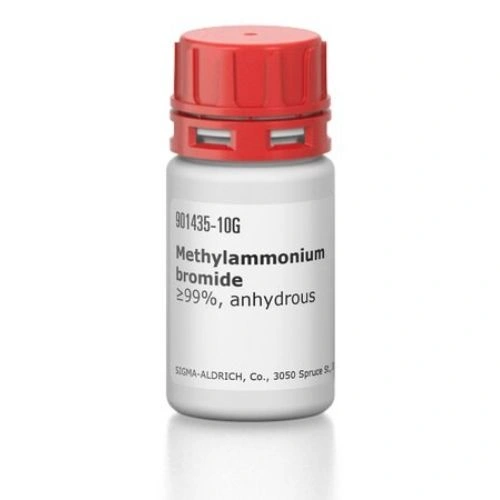
Methylammonium bromide, ≥99%, anhydrous – Sigma-Aldrich
RM1,951.00Brand:
Sigma-Aldrich
Synonyms
Methanamine hydrobromide, methylamine hydrobromide
Cas No.
6876-37-5
General description
We are committed to bringing you Greener Alternative Products, which adhere to one or more of The 12 Principles of Greener Chemistry. This product has been enhanced for “Energy efficiency”.
Application
Methylammonium bromide (MABr) is used as an additive in the fabrication of perovskite solar cells. It helps improve the crystal quality and stability of the perovskite films, leading to enhanced photovoltaic performance.
Organohalide based perovskites have emerged as an important class of material for solar cell applications. Our perovskites precursors with extremely low water contents are useful for synthesizing mixed cation or anion perovskites needed for the optimization of the band gap, carrier diffusion length and power conversion efficiency of perovskites based solar cells.
Disclaimer
- Extremely hygroscopic.
- Handle in glove box.
- Handle and store under nitrogen atmosphere.